Characteristics of a Successful Marriage: 10 Signs of a Happy Marriage
If you’ve ever looked at a happily married couple and wondered what their secret is, here’s a spoiler: it’s rarely one thing, and it’s rarely dramatic.
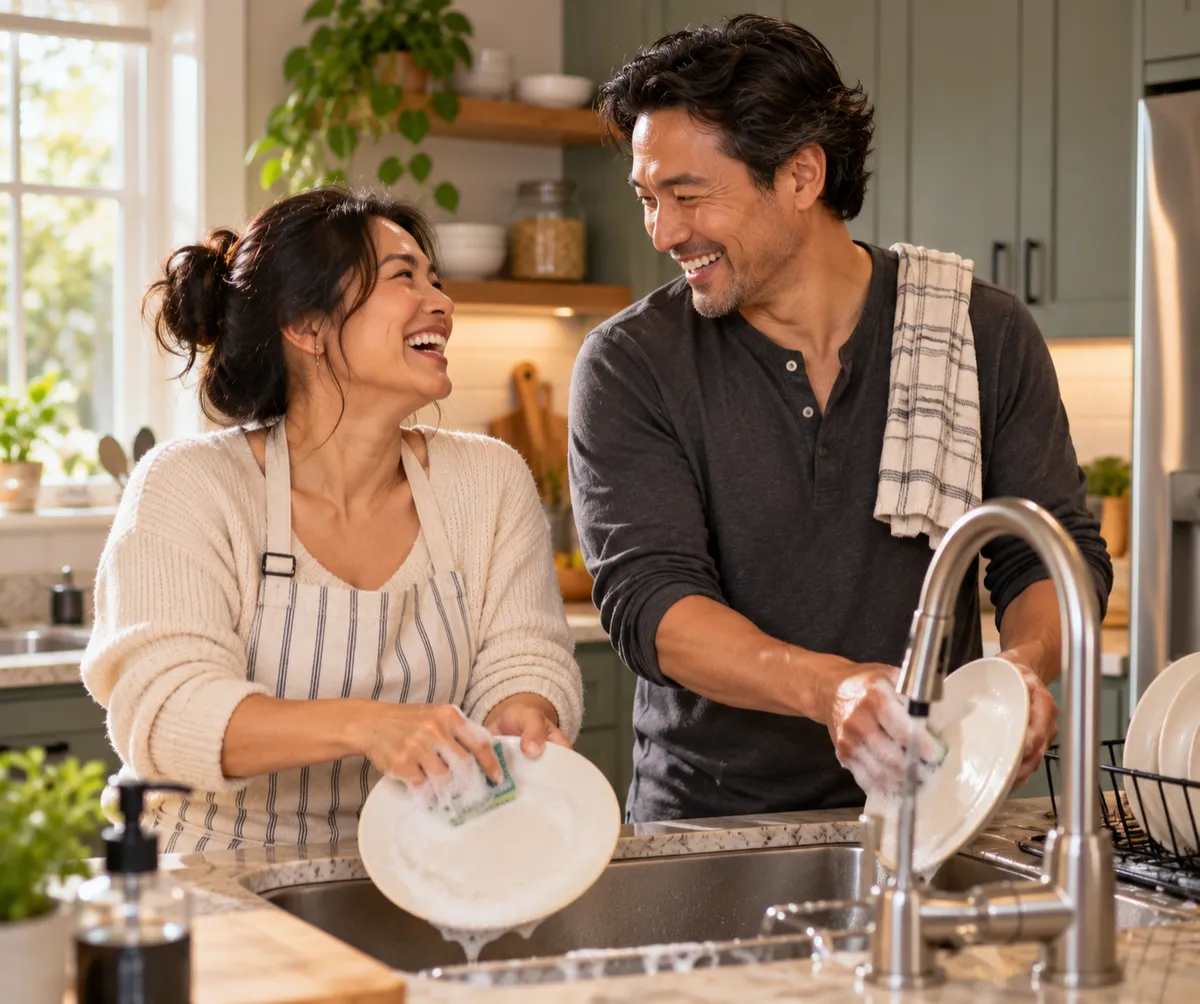
A successful marriage usually looks like two people making breakfast, remembering the dentist appointment, splitting the chores without calling a summit, recovering after a rough conversation, and choosing each other again tomorrow.
The ten traits below aren’t a report card. Very few couples ace all ten at once. Think of them as a map of where your marriage is already strong and where it would welcome a little more attention.
10 Characteristics of a Successful Marriage
1. Both spouses feel the other is committed
Across 43 long-term studies of couples, believing your partner is committed was the strongest relationship-specific predictor of relationship quality (Joel et al., 2020). Commitment shows in everyday choices: consulting each other, following through, and taking problems seriously without threatening the relationship every time you’re upset.
2. Appreciation is spoken out loud
Marriage can make effort invisible. One spouse handles the appointment; the other handles dinner, the school email, or the car repair. Saying thank you makes that work visible again. In a study of couples, daily gratitude predicted better relationship feelings the next day for both partners (Algoe et al., 2010).
3. Good news gets a warm response
A happy marriage is about more than surviving bad news. How partners respond when something goes right was closely tied to relationship well-being in research with dating couples (Gable et al., 2006). Ask about the promotion. Celebrate the compliment. Let your spouse enjoy the moment.
4. Conflict stays focused on the issue
Strong marriages still have arguments. The difference is that a disagreement doesn’t turn into “You’re selfish” or “This is why nothing works.”
5. Repairs happen
Most repairs are short: “I interrupted you.” “I got defensive.” “That sounded harsh. I’m sorry.” Repair is maintenance, not weakness.
6. Life’s work is treated as shared work
Money, chores, caregiving, and planning breed resentment when one person feels responsible for everything. Strong couples keep talking about fairness as circumstances change.
7. Physical intimacy can be discussed honestly
Intimacy changes with stress, health, parenting, aging, and schedules. A healthy marriage makes room for that conversation without shame, pressure, or punishment.
8. Each spouse still feels known
Your spouse is more than a parent, provider, or planner. Ask what they’re thinking about and notice what’s changing.
9. They have rituals that belong to them
• Coffee before the day starts.
• A walk after dinner.
• A weekly show together.
• A few minutes of talk before bed.
10. They protect the marriage from outside pressure
Work, family, phones, and obligations will take every available minute unless someone sets limits. Protecting the marriage might mean saying no to one more commitment or keeping extended family out of private disagreements.
Signs Your Marriage Is Strong
You won’t find “never argues” on this list. Strong marriages argue. They don’t treat every disagreement like a vote on the whole relationship.
• You can raise a concern without fearing the marriage is at risk.
• You generally believe your spouse is on your side.
• You bring important news to each other early.
• You can still laugh together, even in hard seasons.
• You trust each other’s word.
• You can find your way back to each other after conflict.
If a Few of These Feel Missing
Choose one area. Not three, not ten. If appreciation has disappeared, start there. If conflict is doing damage, work on repair. If you’ve become efficient roommates, create one small ritual that isn’t about tasks. Marriages change through repeated behavior more than through one intense conversation about everything wrong.
Safety note: If you feel afraid of your partner, or the relationship includes threats, control, monitoring, or violence, general relationship advice isn’t the right starting point. Call the National Domestic Violence Hotline at 1-800-799-7233 or text START to 88788. |
How Break the Fight Cycle™ Can Help You
When conflict keeps pulling a marriage down, changing how you move through arguments protects nearly everything else on this list. Break the Fight Cycle™ is a private, self-paced online program. In the Starter Series (Modules 1–3), you’ll learn to: ✓ Map how a real argument escalated, from the first spark to the aftermath, using The Escalation Circuit™. ✓ Recognize your own escalation style among seven common patterns (The 7 Escalation Styles™), without labeling or diagnosing anyone. ✓ Practice C.A.L.M.™ and choose a deliberate response to replace your automatic reaction. No workshops, no group sessions, and no explaining your relationship to strangers. Start Breaking the Fight Cycle → www.relationshiplovetips.com/btfc-launch Practical relationship education for recurring conflict patterns. Not therapy, crisis care, or a substitute for professional support. |
Follow us: TikTok | YouTube | Instagram | Facebook
Frequently Asked Questions
What are the characteristics of a successful marriage?
Common characteristics include visible commitment, spoken appreciation, warm responses to good news, respectful conflict, repair after mistakes, teamwork, honest talk about intimacy, curiosity, shared rituals, and limits on outside pressure.
What are the signs of a happy marriage?
You can speak honestly, rely on each other, recover after conflict, share good news, and feel like teammates in hard seasons.
What is the secret to a long-lasting marriage?
There’s no single secret. Commitment, appreciation, warmth, fairness, repair, and the ability to discuss hard things without contempt all matter.
References
Algoe, S. B., Gable, S. L., & Maisel, N. C. (2010). It’s the little things: Everyday gratitude as a booster shot for romantic relationships. Personal Relationships, 17(2), 217–233. https://doi.org/10.1111/j.1475-6811.2010.01273.x
Gable, S. L., Gonzaga, G. C., & Strachman, A. (2006). Will you be there for me when things go right? Supportive responses to positive event disclosures. Journal of Personality and Social Psychology, 91(5), 904–917. https://doi.org/10.1037/0022-3514.91.5.904
Joel, S., Eastwick, P. W., Allison, C. J., Arriaga, X. B., Baker, Z. G., Bar-Kalifa, E., Bergeron, S., Birnbaum, G. E., Brock, R. L., Brumbaugh, C. C., Carmichael, C. L., Chen, S., Clarke, J., Cobb, R. J., Coolsen, M. K., Davis, J., de Jong, D. C., Debrot, A., DeHaas, E. C., . . . Wolf, S. (2020). Machine learning uncovers the most robust self-report predictors of relationship quality across 43 longitudinal couples studies. Proceedings of the National Academy of Sciences, 117(32), 19061–19071. https://doi.org/10.1073/pnas.1917036117
Related Articles
• Best Marriage Advice for Newlyweds: 10 Things to Know in Your First Years
• How to Make a Relationship Last: 12 Habits of Long-Lasting Couples
• Conflict Resolution in Marriage: How to Stop Fighting About the Same Things
• How to Love Your Husband: 9 Ways to Show Love He Can Feel
• Start the Break the Fight Cycle™ Starter Series


